


 LED Grow Lights
 Apollo
 Apollo Original Series
 Apollo Falcon Series
 Apollo X-Series
 Lumatek
 Lumatek ATS Pro Series
 Lumatek Zeus Pro Series
 Lumatek VF Series
 Mars Hydro
 Mars Hydro TS-Serie
 Mars Hydro FC-EVO
 Mars Hydro FC-E Serie
 Mars Hydro SP Series
 Spectrabox
 Spectrabox UFO Series
 Spectrabox XTR Series
 Spectrabox Drone
 Spider Farmer
 Spider Farmer SF-Series
 Spider Farmer SE-Series
 Spider Farmer G-Series
 Spider Farmer Supplemental
 Fluence
 Migro
Migro
 Moeslamp
 KIND LED
 Mother
 Sanlight
 Spectro Light
 Secret Jardin
 Telos LED
 The Jungle
 Viparspectra
 E27 LED Grow Lights
 LED Grow Panel
 LED Grow Strips
 Bilberry
 LED Light Sources
 LED lamps
 E14 LED bulbs
 E14 Filament
 E14 Dimmable Lamps
 E14 Smart Lamps
 E14 Decorative Lamps
 E14 Warm White (3000K)
 E27 LED lamps
 E27 Filament
 E27 Dimmable Lamps
 E27 Smart Light Bulbs
 E27 Decorative Lamps
 E27 Warm White (3000K)
 E27 Neutral White (4000K)
 E27 Cool White (6000K)
 G4 LED bulbs
 G9 LED bulbs
 R7S LED bulbs
 LED Spots
 LED spots GU10
 Smart LED Spots
 Dimmable LED Spotlights
 Recessed LED spotlights
 LED Surface Mount Spotlights
 LED Fluorescent Tubes
 LED TL T5
 LED TL T8
 60 cm
60 cm
 90 cm
90 cm
 120 cm
 150 cm
 LED TL 3000K
 LED TL 4000K
 LED TL 6000K
 LED strips
 LED Strip Warm White 3000K
 LED Strip Bright White 4000K
 LED Strip Cool White 6000K
 LED Strip RGB
 Smart LED Strips
 LED strip accessories
 Decorative lamps
 Amber Lamps
 Smoke Lamps
 LED Filament
 Globe Lamps
 Edison Lamps
 Indoor LED Lighting
 LED Panels
 LED Panel 30x30 cm
 LED Panel 30x60 cm
 LED Panel 60x60 cm
 LED Panel 62x62 cm
 LED Panel 30x120 cm
 LED Panel 60x120 cm
 LED Panel 30x150 cm
 3000K (Kelvin)
 LED Panel 4000K (Kelvin)
 LED Panel 6000K (Kelvin)
 LED Downlights
 LED Downlights Round
 LED Downlights Recessed
 LED Downlights Dimmable
 LED Downlights Surface Mounted
 LED Downlights Square
 LED Railspots
 1-phase LED track spotlights
 3-phase LED track spotlights
 GU10 track spotlights
 Black LED track spotlights
 White LED track spotlights
 Rail spotlights Accessories
 LED ceiling lights
 Dimmable LED ceiling lights
 LED ceiling lights with sensor
 LED ceiling lights with fan
 Round LED ceiling lights
 Square LED ceiling lights
 LED Wall Lights
 LED Wall Lights Up & Down
 LED Wall Lights Sensor
 LED Wall Lights Spot
 LED Wall Lights Dimmable
 LED Wall Lights Design
 Recessed LED wall lights
 LED Floor Lamps
 LED Uplights
 LED Tripod Floor Lamps
 LED Arc Lamps
 LED Design Floor Lamps
 Industrial LED Floor Lamps
 LED Table Lamps
 Rechargeable LED table lamps
 LED table lamps design
 LED table lamps, dimmable
 LED table lamps with sensor
 LED Mirrors
 LED Mirror Lights
 LED bathroom mirrors
 Round LED mirrors
 LED makeup mirrors
 LED mirror cabinets
 LED Hanging lamps
 LED pendant lights E27
 LED pendant lights E14
 LED pendant lights, dimmable
 LED hanglampen design
 Industrial LED pendant lights
 LED high-bays
 LED High Bays 4000K
 LED High Bays 6000K
 Lineaire LED High Bays
 UFO LED High Bays
 LED Fluorescent Luminaires
 LED wireless lighting
 Outdoor LED Lighting
 LED Floodlights
 Garden lighting
 LED Construction Lights
 Street lighting
 LED Sports Field Lighting
 Outdoor Table Lamps
 Light poles
 Outdoor Spike Spotlights
 LED Ground Spotlights
 Outdoor Wall Lamps
 House Number Lighting
 Smart Home
 Smart LED Lighting
 Smart Climate Control
 Smart Thermostats
 Smart Radiator Thermostats
 Smart Energy Monitoring
 Humidifiers & Aroma Diffusers
 Smart Security
 Smart Security Cameras
 Smart Video Doorbells
 Smart Alarm Systems
 SOS buttons & watches
 Smoke, Fire and Gas Detectors
 Smart Home Sensors
 Temperature & Hygrometer Sensors
 Air Quality Monitors
 Motion Sensors (PIR)
 Smart Accessories
 Smart Power Plugs
 Smart Built-In Switches
 Wireless Smart Switches
 Smart Remote Controls
 Smart Gateways
 Commercial LED Lighting
 Lighting By Room
 Living room
 Pendant lamps
 Ceiling lights
 Floor lamps
 Table lamps
 Wall lights
 Bedroom
 Night lights
 Wall Lamps
 Ceiling lights
 Floor lamps
 Bathroom
 Bathroom ceiling lights
 Mirror lighting
 Spots (IP rating suitable)
 LED Mirror Cabinets
 Kitchen
 Ceiling lights
 Pendant lamps
 Spotlights / recessed spotlights
 Kitchen cabinet lighting
 Dining room
 Pendant lamps
 Ceiling lights
 Rail spotlights
 Floor lamps
 Hallway & Corridor
 Children's room
 LED Accessories
 Lampholders & fittings
 GU10 fittings
 E27 fittings
 E14 fittings
 G9 fittings
 Switching equipment
 Light switches
 LED dimmers
 Sockets & cover plates
 Outdoor switches
 Installation cable & wire
 Flexible conduit with wire
 YMVK installation cable
 VD installation wire
 VMVL cables
 Solar cables
 SIHF silicone cables
 Cables & extension leads
 Power cables
 Power cables
 Extension leads
 Cable reels
 Network cables
 Connection materials
 Terminal blocks
 Cable connectors
 Insulation tape
 Cable ties
 Sensors & switching
 Timer switch
 Motion sensors
 Dusk-to-dawn switches
 Installation accessories
 Junction boxes & wall boxes
 Cable trunking
 Mounting hardware
 LED drivers & power supply
 LED drivers
 LED transformers
 Panels & mounting
 LED panel surface frames
 LED panel suspension kits
 Other accessories
 Home Batteries & Power Stations
 E27 festoon cables
 Floodlight accessories
 Red Light Therapy
 Method Seven

Air Quality Monitors
Air quality meters: measure CO₂
An air quality meter gives you control over something you don’t always notice immediately: the quality of the air in your home. We spend a lot of time indoors, and indoor air can become polluted by everyday sources such as cooking, showering, cleaning products, household dust, and insufficient ventilation. An air quality meter makes these factors visible, so you don’t have to guess based on how it feels—you can act on real measurements. That’s not only better for comfort (fresher air, less stuffy), but also practical: you can decide more clearly when to ventilate and where airflow tends to stagnate in your home.
Many people use CO₂ as a quick indicator of ventilation: when CO₂ rises, it often signals that air exchange is lagging behind the number of people in the room. Always combine this with common sense and your specific situation (number of occupants, room volume, open windows/vents), but it helps a lot to make ventilation concrete and measurable instead of “by feeling”.
What does an air quality meter measure?
The exact readings depend on the model. In practice, you’ll most commonly see these measurements:
- CO₂ (ppm): an indicator of ventilation / “fresh air” in a room.
- VOC (volatile organic compounds): can rise due to sprays, cleaning products, paint, odours, and cooking.
- Particulate matter (PM): relevant for cooking, dust, traffic pollution (with windows open), and general air pollution.
- Temperature & humidity: useful for monitoring comfort and moisture balance (often included as an extra reading).
How to get the most out of your measurements
An air quality meter is most valuable when you use it as a “decision aid”. Place it in a representative spot (not right next to a window, radiator, or extractor vent) and look at trends: when does CO₂ rise, when do VOC values peak, and how quickly does the room recover after ventilation? Then make it practical with alerts and routines, so your Smart Home works for you—not the other way around.
Practical routines that deliver immediate benefits
- Ventilation moments: an alert when CO₂ rises or air quality drops, so you open windows/vents in time.
- Bathroom/cooking: spot VOC/PM spikes and ventilate or extract faster.
- Maintain comfort: combine with temperature/humidity to keep your indoor climate stable.
Combine smart within Smart Home (recommended)
For a complete picture, combine air quality measurement with other Smart Home building blocks. Start at Smart Home and build from sensors:
- Smart sensors – an overview of sensors and use cases.
- Temperature & humidity sensors – ideal for sharpening comfort and moisture control.
- Smart climate control – to logically combine measuring and adjusting (comfort/savings).
- Smart plugs – useful to smart-switch a fan or air purifier via routines (based on your triggers).
No products visible in this category?
Sometimes there may be (temporarily) no products visible in this category. Still want advice or a suitable solution for your home? Contact our specialists—we’re happy to help based on your space, ventilation, and preferences.
Uitgelichte merken voor Air Quality Monitors
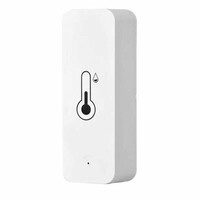
• Meetbereik: −10 tot +60°C; 0–100% RV • Nauwkeurigheid: ±0,5°C / ±5% RV • Connectiviteit: 2.4GHz WiFi (geen hub)
• Meetbereik: −10 tot +60°C; 0–100% RV • Nauwkeurigheid: ±0,5°C / ±5% RV • Connectiviteit: 2.4GHz WiFi (geen hub)
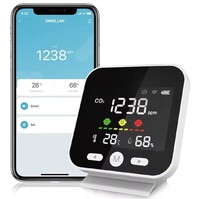
• Metingen: CO₂ / temperatuur / vochtigheid • Connectiviteit: Wi‑Fi 2,4 GHz • Voeding: USB 5V
• Metingen: CO₂ / temperatuur / vochtigheid • Connectiviteit: Wi‑Fi 2,4 GHz • Voeding: USB 5V
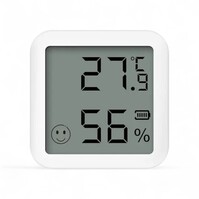
• Connectiviteit: WiFi 2.4 GHz, BLE • Temperatuurbereik: -10°C tot +55°C • Vochtigheidsbereik: 0–100% RH
• Connectiviteit: WiFi 2.4 GHz, BLE • Temperatuurbereik: -10°C tot +55°C • Vochtigheidsbereik: 0–100% RH
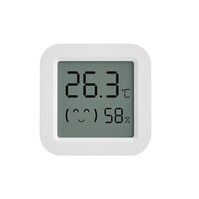
• Connectiviteit: Wi‑Fi 2.4 GHz • Temperatuurbereik: -10 tot +55 °C • Vochtigheidsbereik: 0%–100% RH
• Connectiviteit: Wi‑Fi 2.4 GHz • Temperatuurbereik: -10 tot +55 °C • Vochtigheidsbereik: 0%–100% RH
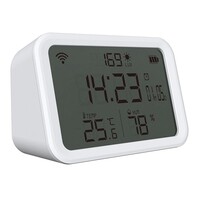
• Wi‑Fi: 2.4GHz (Tuya) • Functies: 4‑in‑1 sensoren • Temperatuurbereik: -10 tot +65°C
• Wi‑Fi: 2.4GHz (Tuya) • Functies: 4‑in‑1 sensoren • Temperatuurbereik: -10 tot +65°C
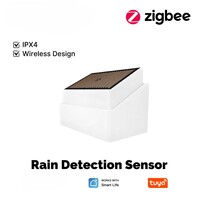
• Connectiviteit: Zigbee 3.0 • Waterdichtheid: IPX4 • Batterijduur: Tot 2 jaar
• Connectiviteit: Zigbee 3.0 • Waterdichtheid: IPX4 • Batterijduur: Tot 2 jaar
Air quality meters: measure CO₂
An air quality meter gives you control over something you don’t always notice immediately: the quality of the air in your home. We spend a lot of time indoors, and indoor air can become polluted by everyday sources such as cooking, showering, cleaning products, household dust, and insufficient ventilation. An air quality meter makes these factors visible, so you don’t have to guess based on how it feels—you can act on real measurements. That’s not only better for comfort (fresher air, less stuffy), but also practical: you can decide more clearly when to ventilate and where airflow tends to stagnate in your home.
Many people use CO₂ as a quick indicator of ventilation: when CO₂ rises, it often signals that air exchange is lagging behind the number of people in the room. Always combine this with common sense and your specific situation (number of occupants, room volume, open windows/vents), but it helps a lot to make ventilation concrete and measurable instead of “by feeling”.
What does an air quality meter measure?
The exact readings depend on the model. In practice, you’ll most commonly see these measurements:
- CO₂ (ppm): an indicator of ventilation / “fresh air” in a room.
- VOC (volatile organic compounds): can rise due to sprays, cleaning products, paint, odours, and cooking.
- Particulate matter (PM): relevant for cooking, dust, traffic pollution (with windows open), and general air pollution.
- Temperature & humidity: useful for monitoring comfort and moisture balance (often included as an extra reading).
How to get the most out of your measurements
An air quality meter is most valuable when you use it as a “decision aid”. Place it in a representative spot (not right next to a window, radiator, or extractor vent) and look at trends: when does CO₂ rise, when do VOC values peak, and how quickly does the room recover after ventilation? Then make it practical with alerts and routines, so your Smart Home works for you—not the other way around.
Practical routines that deliver immediate benefits
- Ventilation moments: an alert when CO₂ rises or air quality drops, so you open windows/vents in time.
- Bathroom/cooking: spot VOC/PM spikes and ventilate or extract faster.
- Maintain comfort: combine with temperature/humidity to keep your indoor climate stable.
Combine smart within Smart Home (recommended)
For a complete picture, combine air quality measurement with other Smart Home building blocks. Start at Smart Home and build from sensors:
- Smart sensors – an overview of sensors and use cases.
- Temperature & humidity sensors – ideal for sharpening comfort and moisture control.
- Smart climate control – to logically combine measuring and adjusting (comfort/savings).
- Smart plugs – useful to smart-switch a fan or air purifier via routines (based on your triggers).
No products visible in this category?
Sometimes there may be (temporarily) no products visible in this category. Still want advice or a suitable solution for your home? Contact our specialists—we’re happy to help based on your space, ventilation, and preferences.
