


 LED Grow Lights
 Apollo
 Apollo Original Series
 Apollo Falcon Series
 Apollo X-Series
 Bilberry
 Lumatek
 Lumatek ATS Pro Series
 Lumatek Zeus Pro Series
 Lumatek VF Series
 Mars Hydro
 Mars Hydro TS-Serie
 Mars Hydro FC-EVO
 Mars Hydro FC-E Serie
 Mars Hydro SP Series
 Mars Hydro Supplemental
 Spectrabox
 Spectrabox UFO Series
 Spectrabox XTR Series
 Spectrabox Drone
 Spider Farmer
 Spider Farmer SF-Series
 Spider Farmer SE-Series
 Spider Farmer G-Series
 Spider Farmer Supplemental
 Fluence
 Migro
Migro
 Moeslamp
 KIND LED
 Mother
 Sanlight
 Spectro Light
 Secret Jardin
 Telos LED
 The Jungle
 Viparspectra
 E27 LED Grow Lights
 LED Grow Panel
 LED Light Sources
 LED lamps
 E14 LED bulbs
 E14 Filament
 E14 Dimmable Lamps
 E14 Smart Lamps
 E14 Decorative Lamps
 E14 Warm White (3000K)
 E27 LED lamps
 E27 Filament
 E27 Dimmable Lamps
 E27 Smart Light Bulbs
 E27 Decorative Lamps
 E27 Warm White (3000K)
 E27 Neutral White (4000K)
 E27 Cool White (6000K)
 G4 LED bulbs
 G9 LED bulbs
 R7S LED bulbs
 LED Spots
 LED spots GU10
 Smart LED Spots
 Dimmable LED Spotlights
 Recessed LED spotlights
 LED Surface Mount Spotlights
 LED Fluorescent Tubes
 LED TL T5
 LED TL T8
 60 cm
60 cm
 90 cm
90 cm
 120 cm
 150 cm
 LED TL 3000K
 LED TL 4000K
 LED TL 6000K
 LED strips
 LED Strip Warm White 3000K
 LED Strip Bright White 4000K
 LED Strip Cool White 6000K
 LED Strip RGB
 Smart LED Strips
 Decorative lamps
 Amber Lamps
 Smoke Lamps
 LED Filament
 Globe Lamps
 Edison Lamps
 Indoor LED Lighting
 LED Panels
 LED Panel 30x30 cm
 LED Panel 30x60 cm
 LED Panel 60x60 cm
 LED Panel 62x62 cm
 LED Panel 30x120 cm
 LED Panel 60x120 cm
 LED Panel 30x150 cm
 3000K (Kelvin)
 LED Panel 4000K (Kelvin)
 LED Panel 6000K (Kelvin)
 LED Downlights
 LED Downlights Round
 LED Downlights Recessed
 LED Downlights Dimmable
 LED Downlights Surface Mounted
 LED Downlights Square
 LED Railspots
 1-phase LED track spotlights
 3-phase LED track spotlights
 GU10 track spotlights
 Black LED track spotlights
 White LED track spotlights
 Rail spotlights Accessories
 LED ceiling lights
 Dimmable LED ceiling lights
 LED ceiling lights with sensor
 LED ceiling lights with fan
 Round LED ceiling lights
 Square LED ceiling lights
 LED Wall Lights
 LED Wall Lights Up & Down
 LED Wall Lights Sensor
 LED Wall Lights Spot
 LED Wall Lights Dimmable
 LED Wall Lights Design
 Recessed LED wall lights
 LED Floor Lamps
 LED Uplights
 LED Tripod Floor Lamps
 LED Arc Lamps
 LED Design Floor Lamps
 Industrial LED Floor Lamps
 LED Table Lamps
 Rechargeable LED table lamps
 LED table lamps design
 LED table lamps, dimmable
 LED table lamps with sensor
 LED Mirrors
 LED Mirror Lights
 LED bathroom mirrors
 Dimmable LED mirrors
 Round LED mirrors
 LED makeup mirrors
 LED mirror cabinets
 LED Hanging lamps
 LED pendant lights E27
 LED pendant lights E14
 LED pendant lights, dimmable
 LED hanglampen design
 Industrial LED pendant lights
 LED high-bays
 LED High Bays 4000K
 LED High Bays 6000K
 Lineaire LED High Bays
 UFO LED High Bays
 LED Fluorescent Luminaires
 LED wireless lighting
 Outdoor LED Lighting
 LED Floodlights
 Garden lighting
 LED Construction Lights
 Street lighting
 LED Sports Field Lighting
 Outdoor Table Lamps
 Light poles
 Smart Home
 Smart LED Lighting
 Smart Climate Control
 Smart Thermostats
 Smart Radiator Thermostats
 Smart Energy Monitoring
 Humidifiers & Aroma Diffusers
 Smart Security
 Smart Security Cameras
 Smart Video Doorbells
 Smart Alarm Systems
 SOS buttons & watches
 Smoke, Fire and Gas Detectors
 Smart Home Sensors
 Temperature & Hygrometer Sensors
 Air Quality Monitors
 Motion Sensors (PIR)
 Smart Accessories
 Smart Power Plugs
 Smart Built-In Switches
 Wireless Smart Switches
 Smart Remote Controls
 Smart Gateways
 Commercial LED Lighting
 Lighting By Room
 Living room
 Pendant lamps
 Ceiling lights
 Floor lamps
 Table lamps
 Wall lights
 Bedroom
 Night lights
 Wall Lamps
 Ceiling lights
 Floor lamps
 Bathroom
 Bathroom ceiling lights
 Mirror lighting
 Spots (IP rating suitable)
 LED Mirror Cabinets
 Kitchen
 Ceiling lights
 Pendant lamps
 Spotlights / recessed spotlights
 Kitchen cabinet lighting
 Dining room
 Pendant lamps
 Ceiling lights
 Rail spotlights
 Floor lamps
 Hallway & Corridor
 Children's room
 LED Accessories
 Method Seven
 Red Light Therapy
 Home Batteries & Power Stations
 Power cables
 Power cables
 Switching equipment

LED Grow Strips
Buy LED grow strips
LED grow strips (also known as linear grow lights or grow bars) are ideal if you want to distribute even grow light across a shelf, grow rack, windowsill, or grow box. They provide targeted PAR grow light with relatively little heat, allowing you to work closer to your plants and illuminate multiple layers (tiers) more easily.
What can you use LED grow strips for?
- Cuttings & seedlings: compact and even light above grow boxes and trays.
- Herbs & microgreens: stable grow light for a windowsill or kitchen rack.
- Plant racks/grow cabinets: perfect for multiple shelves with a tight, linear light line.
- Supplementary light: extra photons in shaded areas in a larger growing setup.
Selection guide in 60 seconds
- Determine the length & coverage: choose a strip/bar that covers your shelf (almost) completely for even distribution. Are you working with multiple shelves? Then multiple shorter light lines are often tighter than one long one.
- Choose the right spectrum:
- Full spectrum: all-round for growth and (in some crops) flowering/fruiting.
- Growth spectrum / “cool white” focused: extra focus on compact growth (useful for seedlings and leafy greens).
- Bloom/flower boost (if available): extra red(dish) light if you are specifically targeting flowering.
- Power supply & connection: go for USB if you want to start small and flexible (e.g. windowsill), or choose a more powerful version with adapter/driver for serious racks and grow tents. (Always check per product which power supply is included and what you may need separately.)
- Mounting & operation: do you want to stick, screw/clip or use an aluminum housing for extra strength and heat dissipation? And do you need a dimmer or timer?
What should you look for in specifications?
- Wattage & efficiency: more power = more light, but focus on the purpose (seedlings require less than light-loving crops).
- PPFD/distance: the closer you hang the strip, the higher the intensity. Start conservatively and build up.
- Dimmability: super handy for allowing young plants to acclimatize gently and then scaling up later.
- IP/protection: in a humid environment (propagator/humidity cover), splash or moisture resistance is a plus.
- Can be shortened/connected: some models can be customized or connected—check this per product.
Practical tips for the best results
- Hanging height: start slightly higher and lower step by step until you see compact growth without stress (curling/bleaching).
- Burning hours: many indoor crops do well with a fixed rhythm (e.g., 12–16 hours/day), depending on plant type and growth phase.
- Uniformity: ensure that the entire growing area receives light; an even distribution results in visibly more uniform plants.
- Heat & ventilation: LEDs also produce heat. A little air movement helps leaf health and temperature stability.
Related categories (useful for comparison)
- All LED grow lights – compare strips with panels and other fixtures.
- Moes lamps – ideal for herbs, microgreens, and compact setups.
- E27 LED grow lights – simple to fit into a socket for targeted plant spots.
- LED grow panels – more power and coverage for tents and larger areas.
Frequently asked questions
Are LED grow strips suitable as main lighting?
For small setups (herbs, microgreens, cuttings, and seedlings), they often are. For larger crops or light-intensive crops, you often combine grow strips with a more powerful fixture (such as a grow panel) or use multiple strips per shelf.
Full spectrum or just “growth”?
If you want a single solution that is versatile, then full spectrum is usually the safest choice. If you focus mainly on leafy greens/seedlings, then a growth-oriented (cooler) spectrum can support extra compact growth.
What power supply do I need?
This varies per model. Some grow strips work via USB (convenient and accessible), others via an adapter/driver (often more powerful). Check per product whether the power supply is included and which connection is used.
Can I customize the strip or connect it in series?
Some models allow this, others do not. Check the product specifications to see whether the strip/bar can be shortened, connected, or is completely “plug & play.”
Uitgelichte merken voor LED Grow Strips
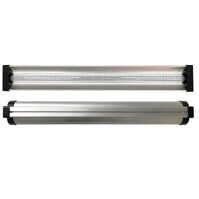
• Vermogen: 60W • Lengte: 1 meter • Full-spectrum
• Vermogen: 60W • Lengte: 1 meter • Full-spectrum

• Vermogen: 15W • Lengte: 1 meter • Full-spectrum
• Vermogen: 15W • Lengte: 1 meter • Full-spectrum

The LED Grow Strip 2.5 meters is the affordable and efficient solution for growing your own plants and flowers, suitable for every home grower or professional. Thanks to the choice between the powerful 4-1-1 spectrum (for growth) and the versatile 12-band
The LED Grow Strip 2.5 meters is the affordable and efficient solution for growing your own plants and flowers, suitable for every home grower or professional. Thanks to the choice between the powerful 4-1-1 spectrum (for growth) and the versatile 12-band
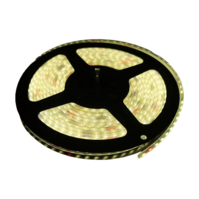
Get started with indoor growing with the 3-meter LED USB Full Spectrum Grow Strip. This flexible and energy-efficient grow strip can be connected to any 5V USB port, such as a phone charger, laptop, or even a TV, in no time. Ideal for growing microgreens,
Get started with indoor growing with the 3-meter LED USB Full Spectrum Grow Strip. This flexible and energy-efficient grow strip can be connected to any 5V USB port, such as a phone charger, laptop, or even a TV, in no time. Ideal for growing microgreens,

• Wattage: 15W • Lengte: 1 meter • Grow-spectrum
• Wattage: 15W • Lengte: 1 meter • Grow-spectrum
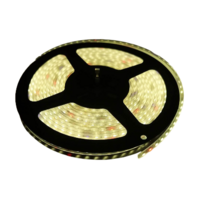
• Vermogen: 75W • Lengte: 5 meter • Full-spectrum
• Vermogen: 75W • Lengte: 5 meter • Full-spectrum
Buy LED grow strips
LED grow strips (also known as linear grow lights or grow bars) are ideal if you want to distribute even grow light across a shelf, grow rack, windowsill, or grow box. They provide targeted PAR grow light with relatively little heat, allowing you to work closer to your plants and illuminate multiple layers (tiers) more easily.
What can you use LED grow strips for?
- Cuttings & seedlings: compact and even light above grow boxes and trays.
- Herbs & microgreens: stable grow light for a windowsill or kitchen rack.
- Plant racks/grow cabinets: perfect for multiple shelves with a tight, linear light line.
- Supplementary light: extra photons in shaded areas in a larger growing setup.
Selection guide in 60 seconds
- Determine the length & coverage: choose a strip/bar that covers your shelf (almost) completely for even distribution. Are you working with multiple shelves? Then multiple shorter light lines are often tighter than one long one.
- Choose the right spectrum:
- Full spectrum: all-round for growth and (in some crops) flowering/fruiting.
- Growth spectrum / “cool white” focused: extra focus on compact growth (useful for seedlings and leafy greens).
- Bloom/flower boost (if available): extra red(dish) light if you are specifically targeting flowering.
- Power supply & connection: go for USB if you want to start small and flexible (e.g. windowsill), or choose a more powerful version with adapter/driver for serious racks and grow tents. (Always check per product which power supply is included and what you may need separately.)
- Mounting & operation: do you want to stick, screw/clip or use an aluminum housing for extra strength and heat dissipation? And do you need a dimmer or timer?
What should you look for in specifications?
- Wattage & efficiency: more power = more light, but focus on the purpose (seedlings require less than light-loving crops).
- PPFD/distance: the closer you hang the strip, the higher the intensity. Start conservatively and build up.
- Dimmability: super handy for allowing young plants to acclimatize gently and then scaling up later.
- IP/protection: in a humid environment (propagator/humidity cover), splash or moisture resistance is a plus.
- Can be shortened/connected: some models can be customized or connected—check this per product.
Practical tips for the best results
- Hanging height: start slightly higher and lower step by step until you see compact growth without stress (curling/bleaching).
- Burning hours: many indoor crops do well with a fixed rhythm (e.g., 12–16 hours/day), depending on plant type and growth phase.
- Uniformity: ensure that the entire growing area receives light; an even distribution results in visibly more uniform plants.
- Heat & ventilation: LEDs also produce heat. A little air movement helps leaf health and temperature stability.
Related categories (useful for comparison)
- All LED grow lights – compare strips with panels and other fixtures.
- Moes lamps – ideal for herbs, microgreens, and compact setups.
- E27 LED grow lights – simple to fit into a socket for targeted plant spots.
- LED grow panels – more power and coverage for tents and larger areas.
Frequently asked questions
Are LED grow strips suitable as main lighting?
For small setups (herbs, microgreens, cuttings, and seedlings), they often are. For larger crops or light-intensive crops, you often combine grow strips with a more powerful fixture (such as a grow panel) or use multiple strips per shelf.
Full spectrum or just “growth”?
If you want a single solution that is versatile, then full spectrum is usually the safest choice. If you focus mainly on leafy greens/seedlings, then a growth-oriented (cooler) spectrum can support extra compact growth.
What power supply do I need?
This varies per model. Some grow strips work via USB (convenient and accessible), others via an adapter/driver (often more powerful). Check per product whether the power supply is included and which connection is used.
Can I customize the strip or connect it in series?
Some models allow this, others do not. Check the product specifications to see whether the strip/bar can be shortened, connected, or is completely “plug & play.”
